Online Marketplace Payment Solutions Part 4 - Is PayPal Safe for Facebook Marketplace?

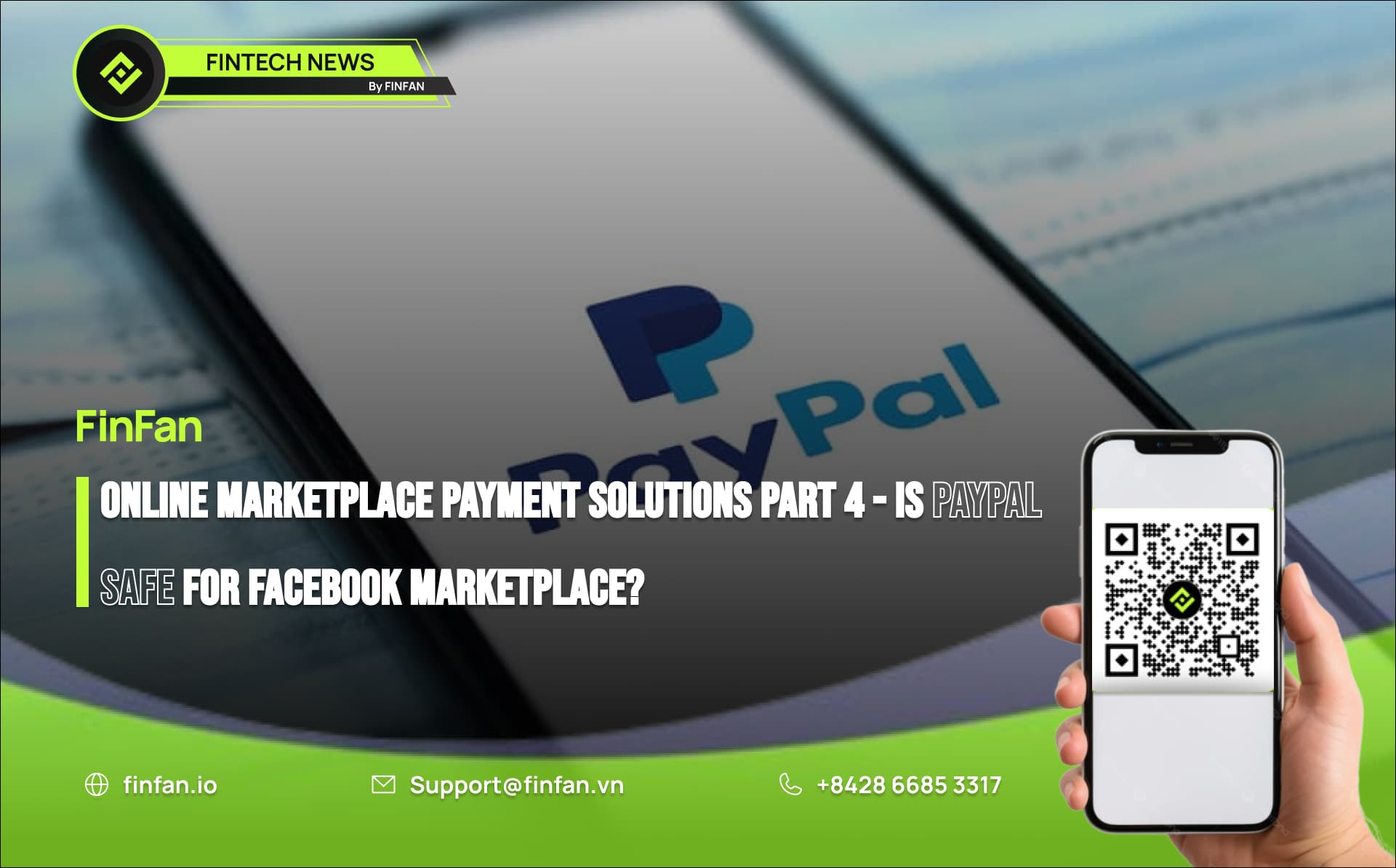
With the rise of online marketplaces such as Facebook Marketplace, buyers and sellers are constantly looking for safe and reliable ways to exchange money.
PayPal, one of the most widely used digital payment platforms globally, is often considered a convenient option for peer-to-peer transactions. However, many users still wonder whether PayPal is a safe payment method when buying or selling items on Facebook Marketplace.
In this article, we explore how PayPal can be used in Marketplace transactions, the security features it provides, and some common risks users should be aware of.
How PayPal Works on Facebook Marketplace
Facebook Marketplace allows individuals to buy and sell items either locally or remotely. While many transactions still occur in person, digital payments are increasingly used for convenience.
Although Facebook Marketplace does not directly process PayPal payments within its native checkout for most listings, buyers and sellers may agree to use PayPal to complete transactions.
Typically, the process works as follows:
1. Agreement on Payment Method
The buyer and seller agree to use PayPal as the payment method during their conversation on Facebook Marketplace.
2. Payment via PayPal
The buyer sends payment through their PayPal account using either:
- PayPal balance
- Linked bank account
- Credit or debit card
3. Fund Transfer
Once the payment is completed, the funds are transferred to the seller’s PayPal account. The seller can then withdraw the funds to a linked bank account.
Because the payment occurs outside Facebook Marketplace’s own checkout system, users should exercise caution and follow safe transaction practices.
Security Features PayPal Provides
PayPal includes several security features designed to help protect users during online transactions.
Buyer Protection:
PayPal offers a Buyer Protection program that may allow buyers to request a refund if an item:
- does not arrive, or
- is significantly different from its description. The availability of protection depends on eligibility requirements and transaction conditions.
Fraud Detection:
PayPal states that it uses automated systems to monitor transactions and detect potentially suspicious activities.
Encryption and Privacy:
PayPal applies encryption technologies designed to protect financial information and reduce exposure of sensitive data between parties.
Dispute Resolution:
If a dispute arises, users may open a case through PayPal’s Resolution Center, where both parties can submit evidence and attempt to resolve the issue.
These mechanisms aim to improve transaction security, though they may not eliminate all risks.
Common Scams on Facebook Marketplace
Although PayPal has implemented the most advanced technologies to ensure the safety of both sellers and buyers on the Facebook Marketplace platform, scammers can still find even the smallest vulnerabilities to defraud buyers.
Unfortunately, Facebook Marketplace can attract scammers who exploit the trust between buyers and sellers. Here are some common scams involving PayPal:
Phishing Scams:
Scammers may send emails pretending to be from PayPal, requesting sensitive information like passwords or financial details. These emails often look very convincing, making it easy for unsuspecting users to fall victim.
A prime example of this issue is that scammers often send emails that closely resemble those from PayPal, luring buyers into sending them money in exchange for gift cards from other e-commerce companies like Amazon, Walmart, etc.
This tactic makes buyers believe they’ve found a great deal and prompts them to provide personal information through links sent in the email.
Overpayment Scams:
This is one of the more common scams on Facebook Marketplace. A scammer “purchases” an item, but then sends an overpayment via PayPal.
They request the seller refund the extra amount, but in reality, the initial payment was fake or fraudulent. By the time the seller realizes, they’ve already sent real money back to the scammer.
Fake PayPal Confirmation Emails:
Some scammers send fake PayPal payment confirmations to convince sellers that they’ve received money. The seller ships the item, only to find out later that the payment never existed.
Non-Delivery or Item Misrepresentation:
Buyers may pay for an item, but the seller never ships it. In other cases, the item arrives, but it’s significantly different from what was described (e.g., counterfeit goods, damaged items).
How to Safeguard Yourself When Using PayPal
To avoid falling victim to scams on Facebook Marketplace, there are several precautions both buyers and sellers should take:
Verify Buyer/Seller Identity:
Always check the profile of the buyer or seller you’re dealing with. Look for reviews, mutual connections, and general activity on their profile.
While reviewing the information and transaction history of buyers or sellers on Facebook who make payments via PayPal, if you feel suspicious about a particular profile, trust your instincts and immediately report it to PayPal so they can verify the user’s identity..
Don’t Click on Suspicious Links:
Scammers often send phishing links via email or private messages, pretending to be PayPal. Always carefully check the information from the links sent to you. If you feel suspicious, report the case to PayPal before clicking on them.
Use PayPal’s Communication System:
Keep all communication and transactions within PayPal’s secure platform. Avoid sharing personal information or agreeing to deals outside the platform.
Recognize Fake PayPal Emails:
PayPal will never ask for sensitive information like your password or credit card number in an email. Learn how to identify phishing emails by checking the sender’s email address and looking for spelling or formatting errors.
Document Transactions:
Save records of all communications, invoices, and shipment tracking information. This will be useful if you need to file a dispute with PayPal.
Alternatives to PayPal on Facebook Marketplace
While PayPal is a solid option for transactions, there are other payment methods that may be better suited for certain users or regions:
- Venmo: Owned by PayPal, Venmo is a popular alternative in the U.S., offering faster transfers for local transactions.
- Zelle: Zelle allows users to send money directly between bank accounts, with no middleman like PayPal. However, it offers fewer protections than PayPal.
- Direct Bank Transfers: Some users prefer the simplicity of a direct bank transfer, especially for larger amounts. However, it lacks the buyer protection PayPal offers.
- Cash on Delivery (COD): For local sales, COD allows the buyer to pay in cash upon receiving the item. This method minimizes risk for both parties.
Each payment method has its pros and cons, and PayPal may not always be the best choice, especially for transactions with high fees or certain international restrictions.
*Disclaimer
This article is intended for informational purposes only and does not constitute financial, legal, or commercial advice. References to third-party platforms such as PayPal, Facebook Marketplace, Venmo, or Zelle are made solely for general informational context. Users should review the official policies and terms of service of each platform before conducting transactions. This content is not affiliated with, endorsed by, or sponsored by any of these companies.
About FinFan
FinFan is a cross-border embedded financial services company that focuses on mass disbursement, fund collection, card processing, IBAN, and digital APMs solutions, which can provide valuable input and integration on and for the same.
FinFan is already integrated with almost the world's well-known MTOs, PSPs, switch, and core fintech platforms such as Money Gram, Thunes, Qiwi, Remitly, World Remit, Bancore, PaySend, Terrapay, Ria Money Transfer (Euronet), Dlocal, Ripple, TripleA, FoMo Pay, Wings, etc.
For more information, please get in touch with us through:
🌐https://finfan.io
📞(+84) 2866 85 3317
✉ support@finfan.vn
LinkedIn: FinFan